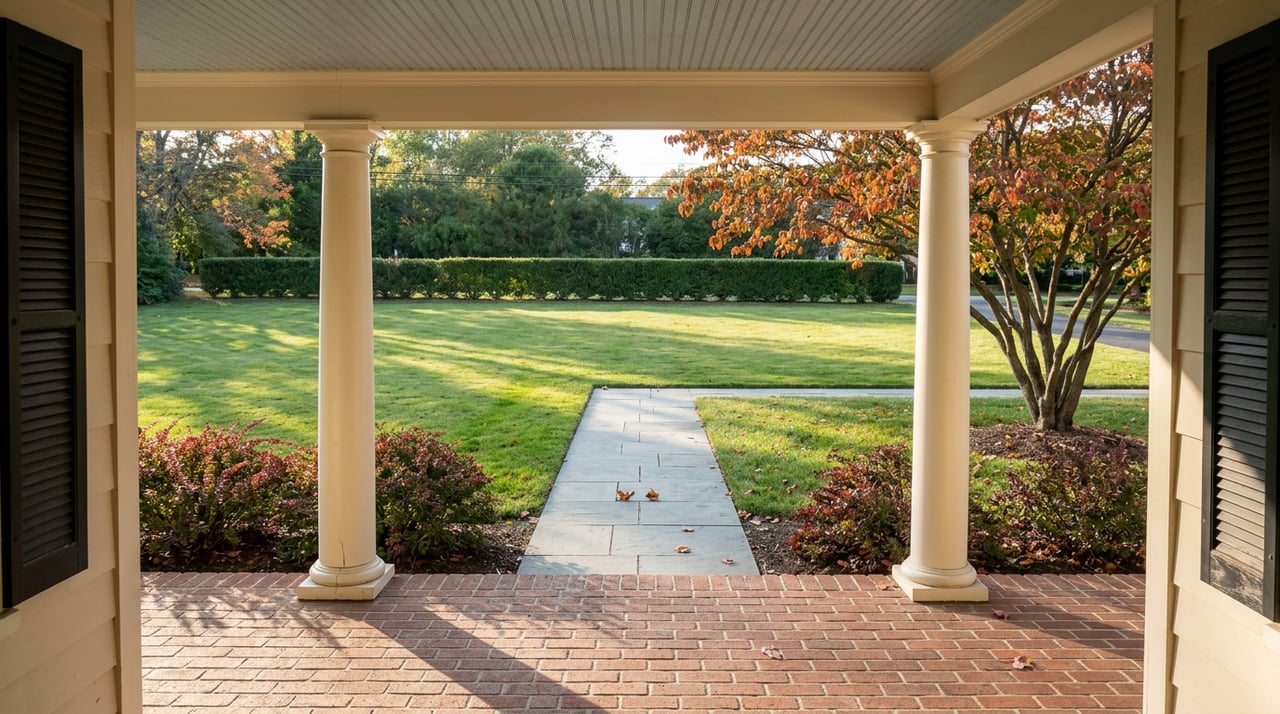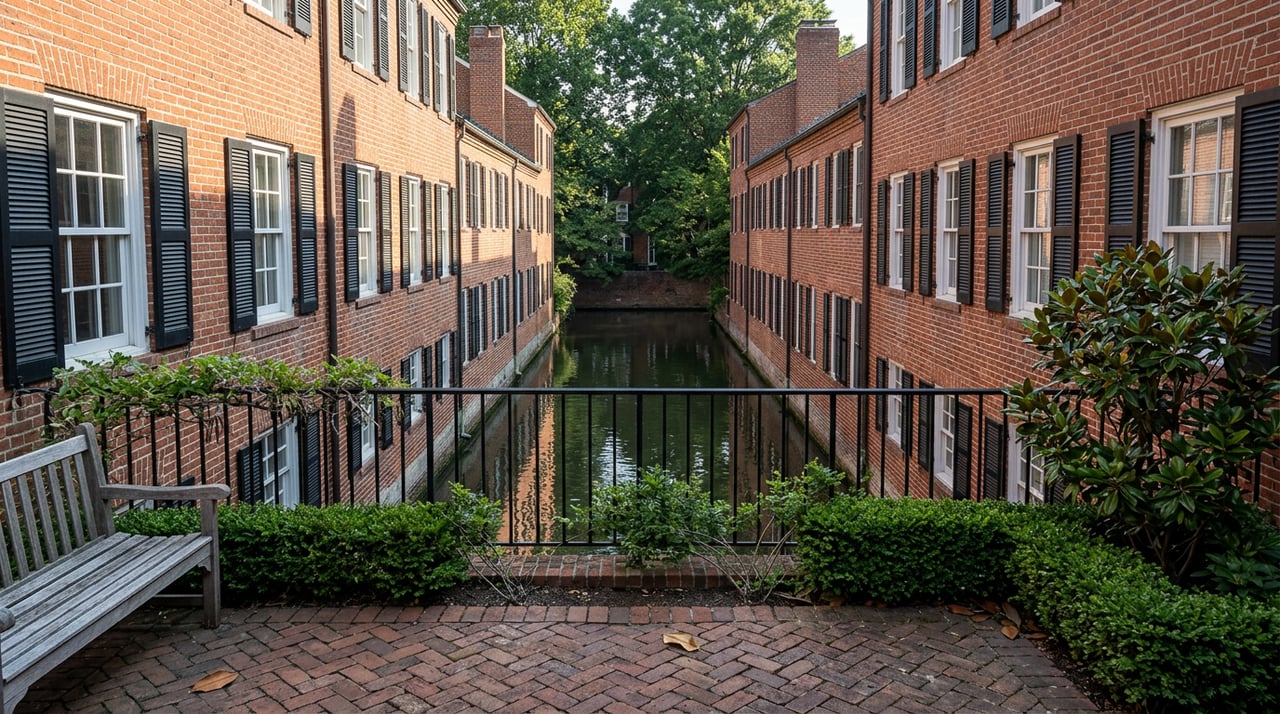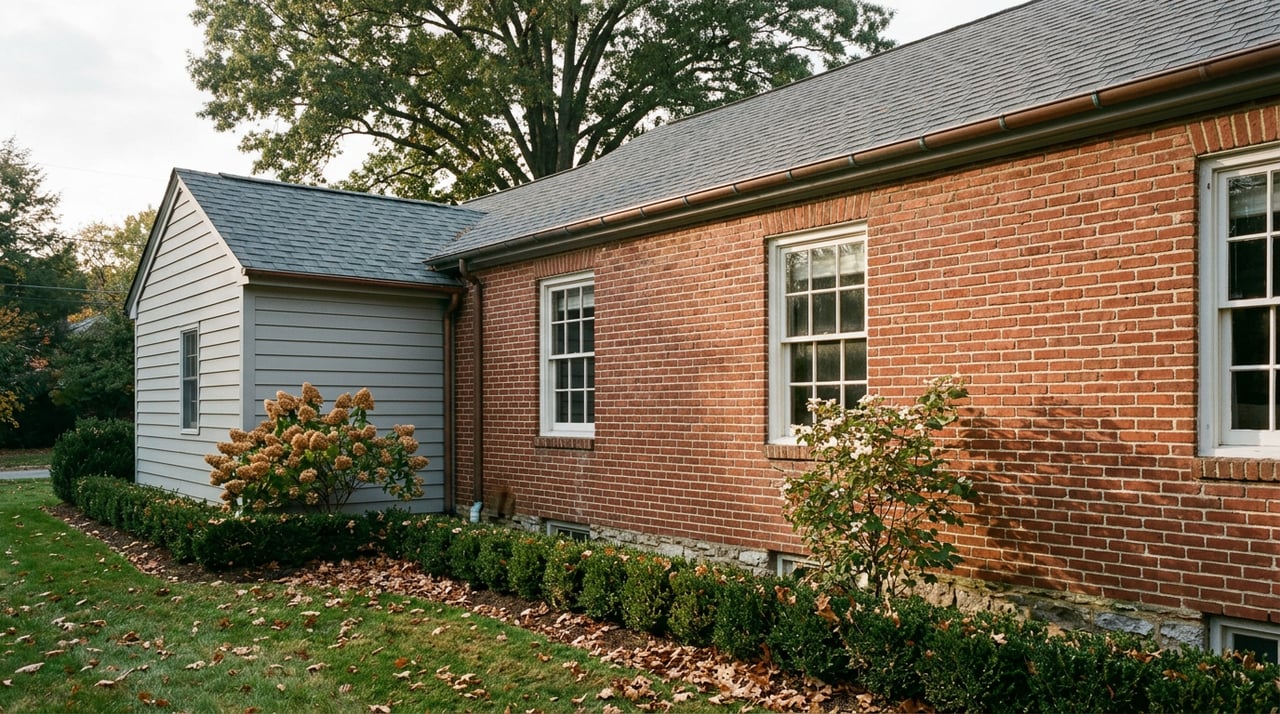
Two 1920s bungalows sit a block apart in Kensington. Same era, same bones, same odds of knob-and-tube wiring behind the plaster. One owner wants to bump out a kitchen wall and swap a window for a door. The other wants the identical project on the identical house type, one street over.
The first owner needs a Historic Area Work Permit, a public hearing before a citizen commission, and a second layer of review from the Town of Kensington on top of that. The second owner needs a building permit and nothing else. Same house. Same contractor. Completely different clock.
That line, not the price tag, not the school district, not even the age of the house, is the single biggest variable buyers and sellers in Kensington tend to discover after they're already under contract instead of before.
What the Historic District Actually Covers
Kensington's Victorian core, the part built up as a railroad town in the 1890s, is a designated Montgomery County historic district under the county's preservation ordinance, Chapter 24A of the county code. Any exterior change visible from the street, and in some cases changes that aren't, generally requires a Historic Area Work Permit (HAWP) from the county's Historic Preservation Commission before a building permit can be issued. Interior work is typically exempt.
What makes Kensington specific, not generic, is the second layer. The county's own step-by-step HAWP guide flags Kensington by name as one of a short list of Montgomery municipalities where a local government office may need to review your proposal before you even apply for the county permit. Brookeville, Chevy Chase Village, Garrett Park, Somerset, and Takoma Park share that distinction. Most homeowners in most of the county deal with one review body. Kensington homeowners inside the historic core deal with two.
Outside that boundary, the town looks and feels similar but plays by different rules. Neighborhoods like Rock Creek Hills, Parkwood, and Chevy Chase View carry plenty of mid-century housing on the same kind of tree-covered lots, with zero HAWP requirement attached. Newer custom construction in South Kensington, the kind pulling buyers who want more house than Bethesda's tighter inventory allows, sits outside the historic boundary entirely and renovates on a standard county timeline.
The Kensington Historical Society, which fields most of the public's questions about the district even though it has no approval authority itself, put it plainly in materials describing the ordinance's intent: the commission's volunteers see themselves as custodians who "are custodians of the buildings, sites, and structures that define our history." That's a preservation mission, not a real estate one. But it shapes exactly how fast you can act on a house.
The 45-Day Clock, and What It Doesn't Cover
Historic Preservation Commission meetings run on a fixed schedule, the second and fourth Wednesday of each month, and the county's own guidance describes a review process that typically takes no more than 45 days once an application is complete. That's a real number you can plan around, but it only applies to exterior scope. Removing a window for a bump-out, altering an exterior door, or changing a roofline for new ventilation are the kinds of projects that trigger it. A full kitchen gut that touches only interior walls, cabinetry, and mechanicals generally does not.
That distinction matters most for a buyer writing an offer with renovation plans already sketched out. If your project is interior only, the historic boundary is close to irrelevant to your timeline. If it touches the exterior, budget the HAWP review, the Town of Kensington's separate look, and the extra weeks that stack on top of a standard Montgomery County permit before demolition can start. Contractors quoting Kensington kitchen projects put the full range at $45,000 to $175,000 depending on scope, with historic-core projects that remove load-bearing walls or alter exterior features landing at the high end once permitting time and design-to-standard work are factored in.
Here's a quick way to see the split:
| Inside the Historic District core | Outside the boundary (Rock Creek Hills, Parkwood, Chevy Chase View, South Kensington infill) | |
|---|---|---|
| Interior renovation | Generally exempt from historic review | No historic review required |
| Exterior renovation (windows, additions, rooflines) | HAWP required, plus separate Town of Kensington review | Standard county building permit only |
| Tree removal | HAWP required | Not historically regulated |
| Typical added review time for exterior work | Up to 45 days for HPC decision, plus town review | None |
The Housing Stock Doesn't Care Which Side of the Line You're On
Here's where it gets counterintuitive. The permitting burden follows the historic boundary. The inspection findings do not.
Kensington's age, not its designation, is what drives what a home inspector actually writes up. Knob-and-tube wiring shows up in homes built before the 1940s whether they sit inside the protected core or in the postwar pockets near Kensington Cabin Local Park. Galvanized water lines that rust from the inside out, cast iron or terracotta sewer laterals prone to root intrusion, and rubble stone foundations with a history of moisture are common across the town's older stock generally, a function of construction era rather than historic status.
That means a buyer touring two similarly priced Kensington houses, one inside the boundary and one just outside it, should expect roughly the same category of inspection findings on old systems either way. The thing that changes is what you're allowed to do about it without a hearing. Rewiring a panel and swapping a water heater are interior mechanical work in both cases. Adding a window while you're in there, or changing an exterior door to bring more light into a renovated kitchen, only becomes a multi-step process on one side of that line.
Why the Median Price Is the Wrong Number to Anchor On
If you've been watching Kensington listings and noticed the median price seems to move depending on which site you're checking, that's not a data error. It's a reflection of how split the inventory is. Kensington's housing mix runs from condos in the low $200,000s to postwar capes to Victorian-era homes in the historic core to new custom construction in South Kensington starting in the neighborhood of $1.5 million on smaller infill lots. A single median blending all of that together tells you less than it looks like it does.
The more useful question for a Kensington buyer or seller in September 2026 isn't "what's the median." It's "what does this specific house, on this specific side of the historic boundary, actually let me do." A $1.1 million Victorian in the core and a $1.1 million new build in South Kensington can carry the same price and completely different renovation math.
What This Means at the Negotiating Table
For sellers inside the historic district, disclosure matters in a very specific way. Exterior work done without a HAWP, even something as simple as a replacement window installed by a previous owner who didn't know the rules applied, can surface during a buyer's due diligence and complicate a sale. It's worth knowing your home's permit history before you list, not after an inspection report raises the question.
For buyers, the smart move is asking the historic-designation question before writing a renovation-contingent offer, not after ratification. A house that looks move-in ready but sits inside the boundary can still require a public hearing for a project you assumed was routine.
And regardless of which side of the line a house sits on, inspection findings on old wiring, old plumbing, or a stone foundation with a moisture history are legitimate items to raise as a credit request. They're common enough in Kensington's older stock that neither side should treat them as a surprise, just as a number to negotiate around.
A Few Quick Answers
Does interior renovation ever need historic approval in Kensington? Generally no. Interior work is typically exempt from HAWP review even inside the historic district. Approval comes into play when a project changes something visible from the outside, like a window, door, or roofline.
If a house is outside the historic boundary, does that mean it won't have old-system issues? Not necessarily. Age drives inspection findings like knob-and-tube wiring or galvanized plumbing more than historic designation does. A postwar home outside the boundary can still carry old systems that warrant a closer look.
How long does a Historic Area Work Permit actually take? The county's guidance describes review decisions typically completed within 45 days of a complete application, on top of whatever time the Town of Kensington's separate review adds before that clock starts.
Kensington rewards buyers and sellers who do their homework on more than just price per square foot. If you're weighing a historic-core Victorian against a newer build a few blocks away, or you're a seller trying to figure out whether that side porch was ever permitted, Team Nurit can walk the specifics of your address, your renovation plans, and your timeline before you write or accept an offer. When you're ready to sell, that same attention to detail is what it means to Launch Your Home the right way.